Media sources and trust
Diverse source preferences
The reliance on different sources highlights the need for tailored communication strategies to accommodate generational and group-specific preferences.
Infected respondents favour online support groups, Facebook, and NHS websites, while affected groups rely more on GOV.UK websites – also demonstrating the differing content needs of each group.
Role of Facebook
The platform’s role as the top channel for community discussions demonstrates its potential for us to engage with audiences directly through dedicated IBCA pages or groups to share updates and answer community questions. However, it is clear the community does not want us to engage outside of designated official pages.
Trust dynamics
Higher trust in our official channels indicates an opportunity to strengthen its role as the primary, authoritative source of information. The lower trust in external sources suggests a need for better alignment between our channels and other platforms to ensure consistent messaging.
Building synergy with partners
Partner with charities, community groups, and trusted platforms to share consistent and reliable updates. Consider providing resources or toolkits to these organisations to ensure they can share accurate information about us , and upcoming processes etc.
The current main sources of updates and information are government websites and online support groups (including charity websites).
| Information source | Percentage |
|---|---|
| Other government websites (GOV.UK) | 58% |
| Online support groups or forums including charity websites | 52% |
| News websites | 27% |
| 27% | |
| NHS websites | 17% |
| X (formerly Twitter) | 5% |
| Hospital | 5% |
| Local GP | 1% |
Infected respondents are more likely to use online support groups, Facebook and NHS websites. Affected groups are more reliant on GOV.UK websites.
Where do you typically go for updates or information on issues related to infected blood?
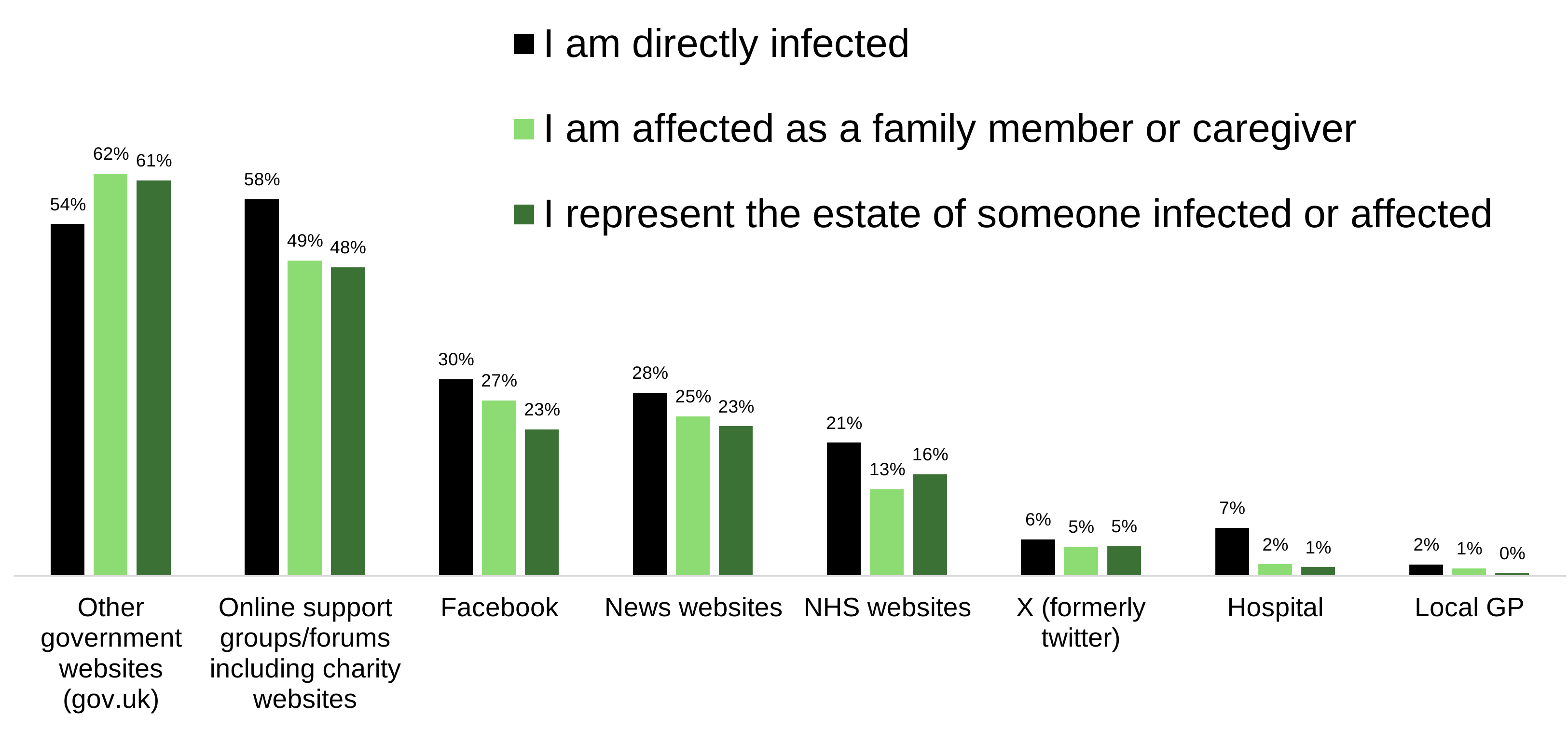
Older respondents (55+) rely on online support groups and government websites. Younger respondents use a broader range of sources and are more likely to use social media for updates or information.
| Information source | Under 55 | 55 or older |
|---|---|---|
| Other government websites (GOV.UK) | 54% | 60% |
| Online support groups or forums including charity websites | 49% | 53% |
| 33% | 25% | |
| News websites | 31% | 25% |
| NHS websites | 18% | 17% |
| X (formerly Twitter) | 8% | 4% |
| Hospital | 3% | 5% |
| Local GP | 1% | 2% |
Our official channels are the most trusted sources of accurate information on IBCA, over GOV.UK websites. There is potentially a lack of synergy between IBCA and the wider community, with lower trust in accurate information on IBCA from other sources.
| Source | Percentage |
|---|---|
| IBCA official channels (emails, letters, social media) | 70% |
| GOV.UK | 51% |
| Charities or community group organisers or leaders | 28% |
| Chat or discussions in charity or community group forums | 19% |
| NHS websites | 15% |
| Social media | 9% |
| News websites | 5% |
| Hospitals | 3% |
| Local GP | 2% |
| Politicians | 1% |
Affected groups have higher levels of trust in IBCA and government sources (GOV.UK). Those directly infected are more likely to trust charities and community groups than affected groups.
Which sources do you trust most for accurate information on IBCA and related matters?
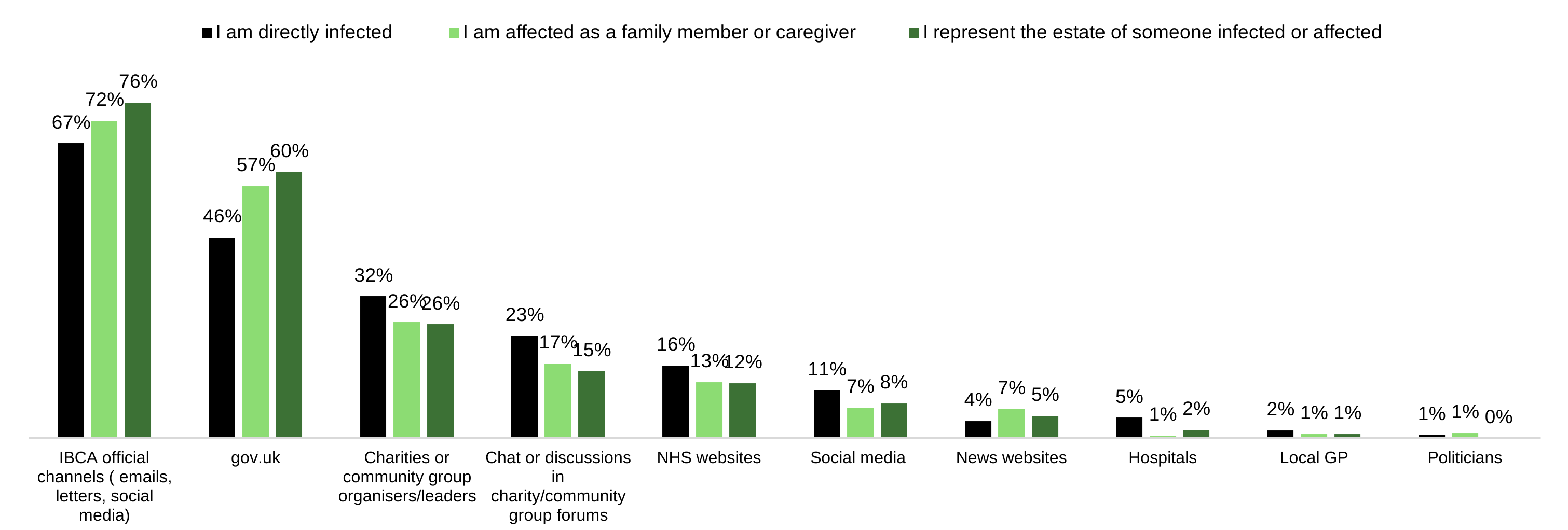
Older respondents have higher trust in IBCA compared to those under 55; conversely, they are less likely to trust government sources (GOV.UK).
| Information source | Under 55 | 55 or older |
|---|---|---|
| IBCA official channels (emails, letters, social media) | 64% | 72% |
| GOV.UK | 56% | 49% |
| Charities or community group organisers or leaders | 24% | 29% |
| Chat or discussions in charity or community group forums | 19% | 19% |
| NHS websites | 14% | 15% |
| Social media | 12% | 7% |
| News websites | 7% | 5% |
| Hospitals | 3% | 3% |
| Local GP | 1% | 2% |
| Politicians | 1% | 1% |
Facebook is the top channel for discussion amongst the community.
| Platform or method | Percentage |
|---|---|
| 29% | |
| Email or mailing lists | 23% |
| In-person discussions (e.g. support groups, community meetings) | 16% |
| Charities or advocacy group meetings | 16% |
| Online forums or discussion boards | 15% |
| Messaging apps (e.g. WhatsApp) | 14% |
| Other social media platform | 6% |
| X (formerly Twitter) | 4% |
| 1% | |
| None of these | 37% |
For those who do discuss issues related to the infected blood scandal, Facebook is the most used platform for both infected and affected groups.
Which platforms or methods do you use to discuss issues related to the infected blood scandal with others?
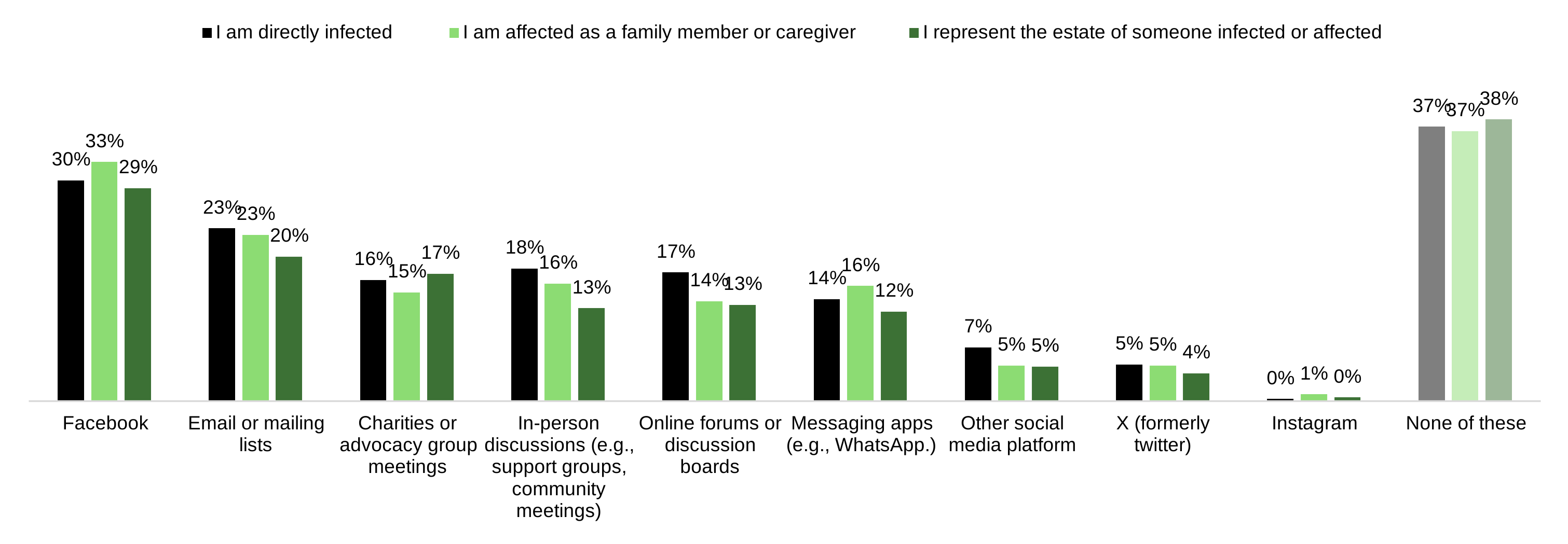
Under 55s are significantly more likely to use Facebook to discuss infected blood issues with others.
| Platform or method | Under 55 | 55 or older |
|---|---|---|
| 38% | 26% | |
| Email or mailing lists | 21% | 25% |
| In-person discussions (e.g. support groups, community meetings) | 17% | 16% |
| Online forums or discussion boards | 17% | 14% |
| Charities or advocacy group meetings | 13% | 17% |
| Messaging apps (e.g. WhatsApp) | 17% | 12% |
| Other social media platform | 6% | 6% |
| X (formerly Twitter) | 5% | 4% |
| 1% | 0% | |
| None of these | 34% | 39% |