Current communication from IBCA
Primary information sources
Our newsletters and GOV.UK websites are the most-used resources, with one-third also relying on social media or community groups and charities.
Channel preferences vary by demographic
Older respondents lean heavily on our newsletters, while younger respondents prefer a mix of channels. A multi-channel communication strategy is necessary to reach all audience segments effectively.
Clarity and relevance are key gaps
Most agree that our communications effectively convey our purpose. However, opinions differ on whether they adequately clarify eligibility for compensation.
The mixed feedback regarding the detail and relevance of current communications underscores the diverse needs of the community. This highlights the importance of tailoring content more closely to individual needs, with a stronger emphasis on explaining compensation entitlements, rather than primarily focusing on our overarching purpose.
Visual aids could improve engagement
The preference for more visual aids highlights an opportunity to make complex information easier to understand and more engaging.
Update frequency
No respondents felt overwhelmed by the frequency of our communications but there is a significant demand for more frequent communication. However, increased frequency of comms and updates does need to be managed against the risk of oversaturating and overwhelming the community.
Our newsletters and GOV.UK websites are the main sources for information. 1 in 3 also rely on social media or community groups / charities.
| Information source | Percentage |
|---|---|
| IBCA newsletters (usually via email) | 86% |
| GOV.UK website/pages | 64% |
| Community groups or charities | 34% |
| Social media | 33% |
| Online news/media | 27% |
| Other news/media | 13% |
| Print news/media | 12% |
All groups (infected or affected) rely on our newsletters for information. Those infected use a broader range of sources for information e.g. social media and online news.
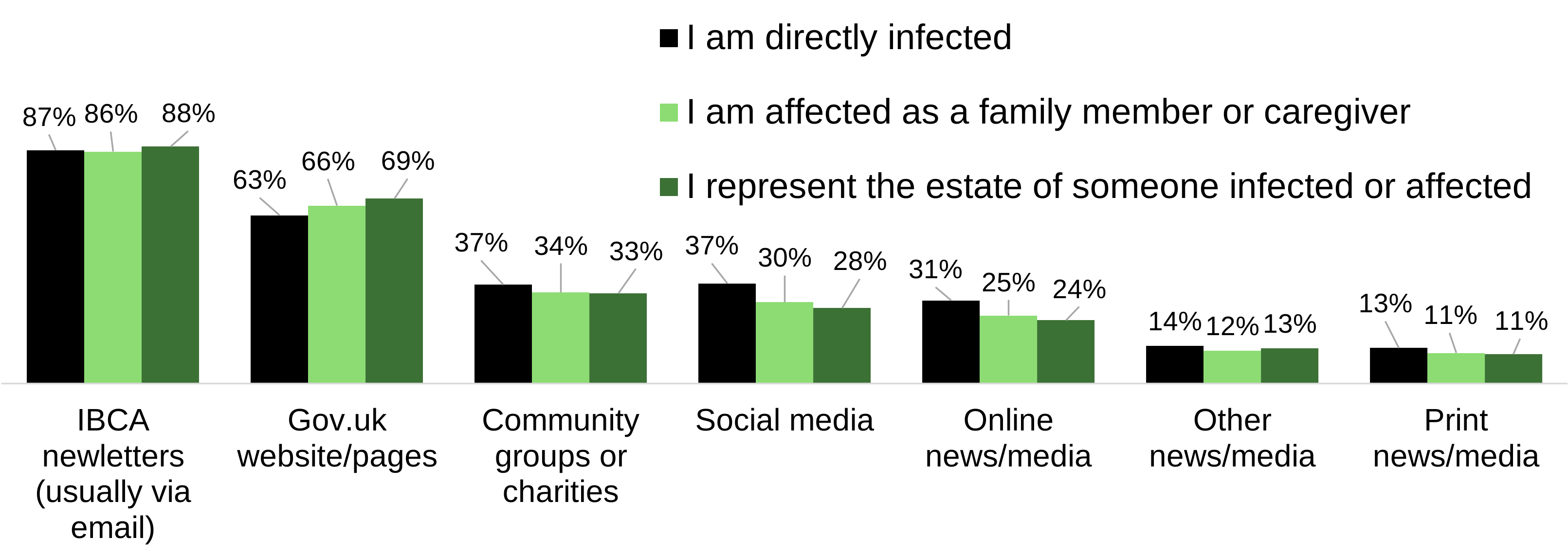
Older respondents rely more heavily on our newsletters. Those under 55 use a broader range of sources.
| Information source | Under 55 | 55 or older |
|---|---|---|
| IBCA newsletters (usually via email) | 81% | 88% |
| GOV.UK website/pages | 65% | 63% |
| Community groups or charities | 37% | 32% |
| Social media | 38% | 30% |
| Online news/media | 33% | 24% |
| Other news/media | 13% | 13% |
| Print news/media | 11% | 12% |
Most respondents agreed that our communications help them to understand who we are and what we are here to do.
How much do you agree with this statement?
| Response | Percentage |
|---|---|
| Strongly agree | 22% |
| Agree | 57% |
| Disagree | 12% |
| Strongly disagree | 5% |
| I have not received any IBCA communication | 2% |
| I have received some communication, but cannot remember who it was from | 1% |
Respondents were more polarised when asked if our communications help them to understand entitlement to compensation.
How much do you agree with this statement?
| Response | Percentage |
|---|---|
| Strongly agree | 10% |
| Agree | 34% |
| Disagree | 29% |
| Strongly disagree | 18% |
| I do not know | 5% |
Opinions on our communications are divided. The mixed views on the level of detail highlight the community's diverse and complex needs. Most feel the information could be more relevant to their needs and two-thirds would prefer more visual aids.
| The information provided is easy to understand | 55% | 41% |
|---|---|---|
| Communications are concise and to the point | 55% | 39% |
| It is always clear what the message is asking me to do (e.g. take an action, stay informed) | 59% | 33% |
| I feel the communication provides the right level of detail | 41% | 53% |
| I sometimes find the information overwhelming or too complex | 57% | 40% |
| The language used is accessible and straightforward | 68% | 28% |
| There is usually enough background or context provided to fully understand the message | 54% | 41% |
| I often feel the information could be more relevant to my specific needs | 82% | 14% |
| The purpose of each communication (e.g. information, request for action) is clear | 61% | 32% |
| I would appreciate more visual aids (e.g. infographics, bullet points) to make it easier to understand | 66% | 25% |
| Response | Percentage |
|---|---|
| I receive updates too often | 1% |
| I don’t receive updates often enough | 25% |
| The timing of communications is predictable and meets my needs | 31% |
| The timing of communications feels irregular or inconsistent | 34% |
| I would prefer to receive updates on a set schedule | 19% |
| I have not received regular communications from the IBCA | 6% |
No respondents feel overwhelmed by the frequency of updates, but 1 in 4 want them more often. Opinions on timing are mixed, with 1 in 5 preferring a set schedule.